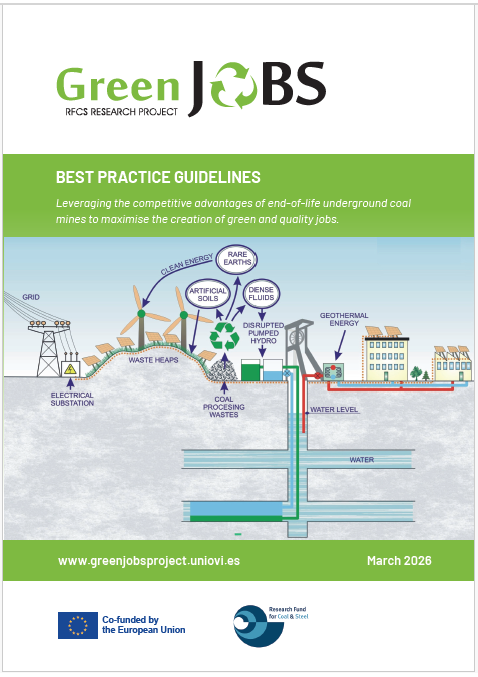
These best practice guidelines are primarily addressed to European, national and regional policymakers, and to the competent authorities responsible for planning and implementing just transition measures in coal regions. They are also intended for owners and managers of end-of-life underground coal mines (and their associated industrial ecosystems) who must decide on future developments and therefore need to anticipate, during the preclosure phase, the technical, regulatory, financial and workforce aspects that must be put in place before closure.
The timeline for ceasing or scaling down activities varies from one territory to another; however, experience
shows that effective pre-closure planning should begin several years in advance. As a practical rule of thumb, five years is often an appropriate timeframe, while two years should be considered the minimum to organise the critical preparatory steps, engage stakeholders, and avoid avoidable lock-ins or missed opportunities.
Other stakeholders may also find these guidelines useful, including environmental authorities and NGOs, private investors and project developers, trade unions and social partners, education and training providers, research organisations, and citizens’ associations. They can use the guidelines to understand the opportunities and constraints of repurposing mines through renewable energy and circular economy pathways (e.g., geothermal and green hydrogen from mine water; PV/wind on waste heaps; storage options; and materials recovery routes), and what these choices mean for job creation and re-skilling needs.